

Joseph Stiglitz is one of the world’s most influential economists. A Nobel Laureate, former World Bank Chief Economist, and Columbia University professor, he offers corporate audiences rare insight into global markets, policy reform, and the future of capitalism.
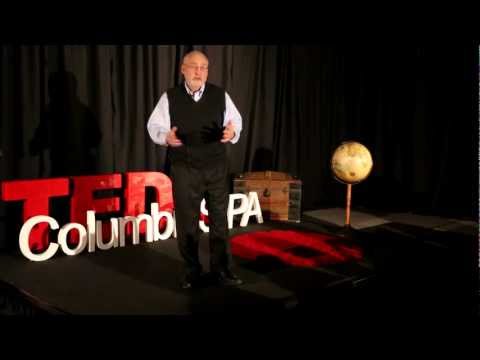

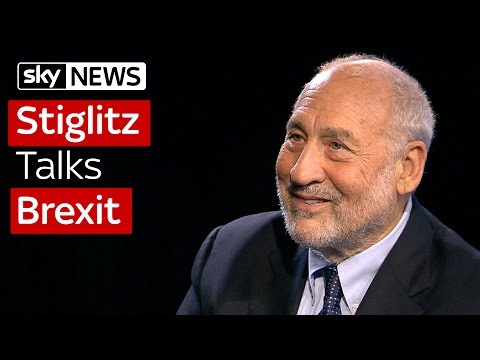
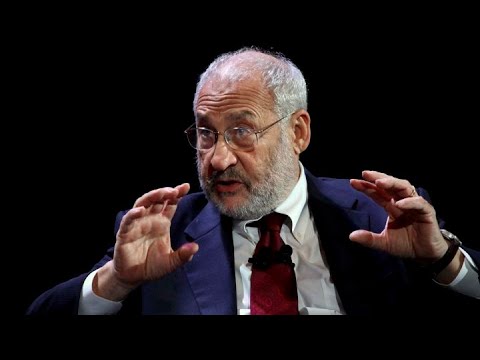
"Now a distinguished professor at Columbia, Joe is a brilliant intellect, a great conversationalist, and because his work goes on challenging us all to rethink our ideas, he will always be a controversialist wherever he goes."
Joseph Stiglitz is a Nobel Prize-winning economist, university professor at Columbia University, and one of the world’s most respected voices on economic policy, globalisation, and inequality. With an unparalleled career in academia and public policy, he provides a powerful lens on the state of the global economy and what must change.
Professor Stiglitz has held several of the most prestigious roles in economic policymaking. He served as Chief Economist and Senior Vice-President of the World Bank (1997–2000), and Chairman of the U.S. Council of Economic Advisers under President Clinton (1995–1997). In 2001, he was awarded the Nobel Memorial Prize in Economic Sciences for his work on the Economics of Information, which profoundly reshaped modern economic thought.
He was a lead author of the 1995 Intergovernmental Panel on Climate Change (IPCC) Report, which contributed to the Nobel Peace Prize awarded to the IPCC in 2007. A former professor at Yale, Princeton, Stanford, MIT and Oxford, he now teaches at Columbia University and chairs Columbia’s Committee on Global Thought. He is also Co-Chair of the High-Level Expert Group on the Measurement of Economic Performance and Social Progress at the OECD and Chief Economist of the Roosevelt Institute.
Stiglitz is also the founder of the Initiative for Policy Dialogue, a think tank focused on inclusive economic development, and has advised international institutions, governments, and NGOs around the world. In 2009, he was appointed by the United Nations to lead the Commission on the Reform of the International Monetary and Financial System.
Professor Stiglitz brings intellectual authority and global perspective to every event. Known for his clarity, wit, and straight-talking delivery, he distills complex economic theories into relevant, impactful narratives. He is especially valued by business leaders, policymakers, and investors seeking a deeper understanding of macroeconomic risk, global financial trends, and emerging policy shifts.
Whether on stage at the World Economic Forum or in a private leadership session, he challenges audiences to think differently about capitalism, regulation, and the future role of government in markets.
Joseph Stiglitz is a prolific and widely influential author whose work has shaped global debates on economics, inequality, and policy reform. His bestselling books include People, Power and Profits: Progressive Capitalism for an Age of Discontent, Globalization and Its Discontents, The Euro: How a Common Currency Threatens the Future of Europe, The Great Divide: Unequal Societies and What We Can Do About Them, and Freefall: America, Free Markets, and the Sinking of the World Economy. His titles have sold over one million copies and have been translated into more than 35 languages worldwide.
His books have sold over one million copies globally and been translated into over 35 languages.
Professor Stiglitz has shared his expertise with a wide array of leading global institutions, including the World Bank, the International Monetary Fund, the United Nations, the OECD, and the European Commission. He has also advised national governments and central banks around the world, and contributed to major corporations and global forums such as the World Economic Forum.
Contact us now for more information on how Joseph can provide expert insight on global economic trends, inform strategic decision-making, and add exceptional value to your next conference or leadership event.


Kishore Mahbubani is a distinguished diplomat and academic with over five decades in public service and academia. His profound insights on global policy, East-West relations, and diplomacy make him a sought-after keynote speaker for corporate events worldwide.

Linda Yueh, a distinguished economist, author, and speaker with a profound impact on global economic discussions, specialises in macroeconomics, globalisation, and China’s economic evolution. Her expertise enriches numerous prestigious institutions and media outlets.

Misha Glenny is an award-winning journalist, broadcaster, author and keynote speaker specialising in geopolitics, cyber security and organised crime. A former BBC Central Europe Correspondent, he brings decades of frontline experience to corporate events, helping audiences understand cyber threats, global organised crime, great power relations and the forces reshaping business and society.

Charlie Ang is a corporate futurist, AI strategist and innovation leader who helps organisations prepare for an intelligence-abundant future. Combining strategic foresight with practical business experience, he equips leaders to embrace AI, navigate disruption and build future-ready organisations with confidence.

Nina Schick is a geopolitical strategist and AI expert specialising in the global race for Artificial General Intelligence and industrial intelligence. She helps business leaders and policymakers understand how AI infrastructure, generative technology and geopolitical competition are reshaping global power, security and economic strategy.

John Thackara is a writer, curator and leading voice on sustainable futures. He connects design with daily life, clean growth and mental wellbeing, sharing real-world stories from cities and bioregions. He helps diverse partners build lasting ecological relationships, publishes at thackara.com, and speaks at conferences, corporate events and arts festivals.

An influential public speaker with real-world impact, Bob Geldof is a successful musician, entrepreneur and political activist who brings vast personal experiences from music, media and world politics to every stage. He mixes sharp insight with humour and clear, powerful messaging, which is why he is a favourite for corporate events and after-dinner slots.

Dive into political science and global politics with Ian Bremmer, founder of Eurasia Group and a leading expert in the field. Known for making complex international issues easy to understand, he offers clear, independent insights into global risks and their impact on the economy.

He served as Ireland’s Taoiseach from 2011 to 2017, leading the country out of the 2008 financial crisis. Under his leadership, Ireland became Europe’s fastest-growing economy — a powerful example of how effective governance fuels recovery.

Arancha González Laya
Arancha González Laya has served as Dean of the Paris School of International Affairs (PSIA) at Sciences Po since March 2022. With extensive experience in global economics and political affairs, she has held notable positions such as Spain’s Minister of Foreign Affairs and United Nations Assistant Secretary-General.